









Long before it appeared in contemporary menswear, sashiko was born from necessity. What began as a humble method of reinforcing garments for rural workers in Japan has evolved into one of the most distinctive textile traditions in the world—recognized today for both its durability and its unique visual depth.
This is the story behind sashiko clothing, and why the fabric continues to resonate centuries later.

What is Sashiko?
Sashiko translates directly to “little stabs,” a reference to the small, repeated running stitches that define the technique.
Originating during Japan’s Edo period (1603–1868), sashiko began as a practical form of reinforcement. In northern regions such as Tōhoku, where winters were long and cotton was scarce, rural communities relied heavily on hemp and ramie textiles. These fibers were durable but not especially warm. Layers were stitched together with dense rows of white cotton thread, both to strengthen worn garments and to trap warmth between the fabrics.
Over time, these reinforcing stitches developed into geometric patterns—waves, interlocking circles, grids—many of which carried symbolic meaning tied to protection, prosperity, or longevity.
Why Was Sashiko Developed?
The origins of sashiko are inseparable from resourcefulness. During much of the Edo period, cotton was expensive and often restricted to the upper classes. Rural families would repair and rework garments repeatedly, passing them down through generations. Sashiko stitching allowed them to extend the life of clothing indefinitely.
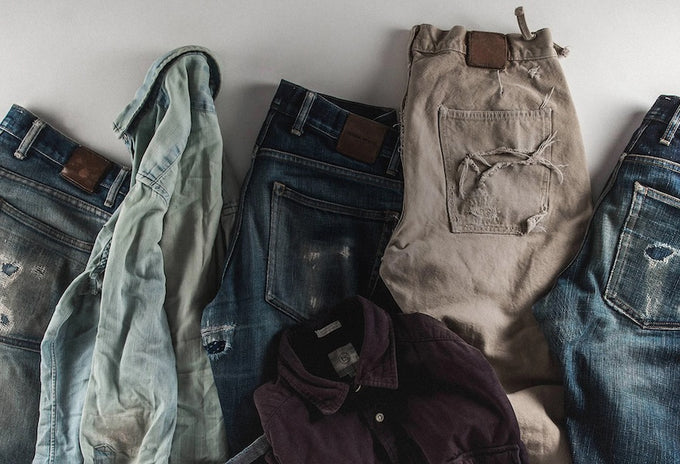
This culture of repair gave rise to what is now known as boro—heavily patched and layered textiles that reflect decades of visible mending. Today, boro textiles are celebrated as artifacts of Japanese craft, but historically they were simply evidence of necessity and stewardship. Sashiko made garments stronger. It made them warmer. And it allowed nothing to go to waste.

What is Sashiko Fabric Today?
While traditional sashiko was hand-stitched onto existing cloth, modern sashiko fabrics often replicate the appearance and durability of that stitching through specialized weaving techniques.
One of the most well-known evolutions of sashiko cloth appears in kendo uniforms. Kendo-gi jackets are woven with thick, textured cotton designed to absorb impact and withstand repeated stress. The fabric’s distinctive raised pattern echoes the look of hand-stitched sashiko, but is created at the loom for uniform strength.
Today’s sashiko fabrics maintain three defining characteristics: dimensional texture that creates depth and visual interest, a structured hand feel that softens gradually with wear, and exceptional durability that often outlasts conventional fabrics.
The result is a cloth that feels substantial without being stiff, and textured without being ornamental.

What Makes Sashiko Clothing Unique?
Unlike smooth twills or flat weaves, sashiko has presence. The raised texture catches light differently, giving garments subtle variation across the surface. The density of the weave creates resilience, yet the fabric breaks in over time, conforming naturally to the body.
Because of its heritage as reinforcement, sashiko tends to feel grounded and purposeful. It carries a sense of permanence, a reminder that clothing can be built to last.
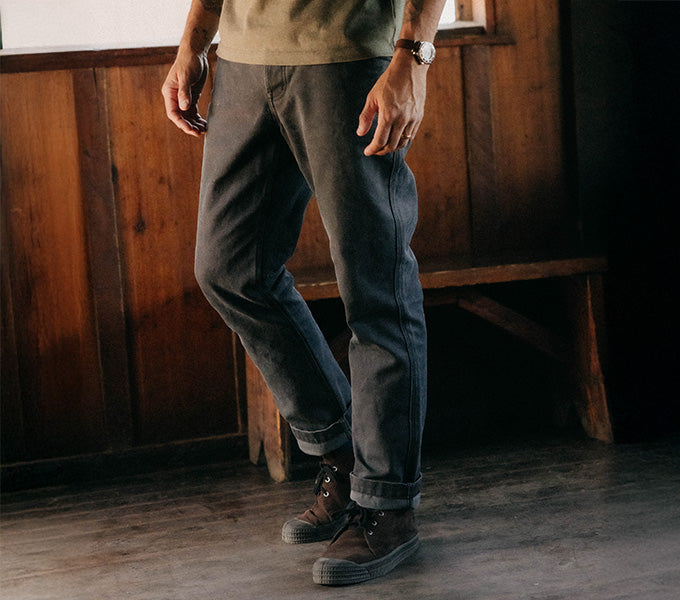
In contemporary menswear, sashiko has found its way into shirts, pants and layers alike. Sashiko shirts lend texture to simple silhouettes, while sashiko pants and jackets are prized for their durability and structure. Though modern interpretations may be more refined than their predecessors, the underlying principles remain the same: longevity, utility, and honest construction.

Is Sashiko Still Relevant Today?
Perhaps more than ever. In an era defined by disposability, sashiko stands for something different. Its origins are rooted in repair, conservation, and respect for material. Even when recreated through contemporary weaving, the fabric retains that philosophy.
It rewards wear. It improves with time. It does not demand attention, but it earns it.
Our Approach to Sashiko
At Taylor Stitch, sashiko has become one of our signature fabrics because it reflects the values we return to season after season: durability, texture, and thoughtful construction.
Across shirts, pants, and relaxed silhouettes, our sashiko styles are built to carry the dimensional character of traditional stitching while being engineered for everyday wear.
Today, whether stitched by hand or woven at the loom, sashiko continues to represent something rare in modern clothing: material integrity backed by history. And that’s a fabric story worth telling.


